




 Indietro














The primary reasons for organisations moving to the cloud are to 1) reduce costs and 2) allow for services to be supported by a 3rd party that can adapt and enhance features at scale. As more organisations adopt a cloud-first strategy to embrace these benefits, the legacy model of running and supporting a corporate network starts to show diminishing returns. In fact, until recently, for many organisations the plan was to continually grow and enhance their network. However, as the majority of applications and services are now provisioned from the cloud and consumed by employees on mobile devices (laptops, tablets, smartphones, etc) routing this access and managing connectivity through a corporate data centre becomes a bottleneck. As an analogy, it’s similar to booking a flight to a destination but choosing a multitude of connecting flights zigzagging across the globe whilst paying a premium for the increased travel time. The smarter decision is to choose a fast, more cost-effective direct option.
For most organisations, over 50% of WAN traffic is destined for the internet and this number increases every year. For every legacy application replaced by SaaS, this increases the volume of traffic destined for the cloud. In fact, over 85% of enterprise internet traffic has already moved from web to cloud. Many organisations are now realising the implications of not transforming their network to best serve their changing IT infrastructure. So, what are the costs of network transformation and where should an organisation start?
What numbers should feed your calculations?
Assess the following current costs:
- WAN cost (HQ and branch offices) including MPLS, SD-WAN and Bandwidth Aggregator costs
- Network and Security appliances required per location (Network break-out points including Secure Web Gateways (SWG), SSL/TLS inspection appliances, Anti-Malware sandbox appliances, Next-Gen Firewalls, Intrusion Prevention Systems (IPS), Virtual Private Networks (VPN) etc
- IT/Security personnel time required for both change management administration and patching, updating and managing appliances including replacement of appliances every 3-5 years
- Employee training time and costs
- Power usage and environmental impact of running multiple silos of appliances across every break-out point
For the average organisation, these costs can quickly escalate and it’s not surprising to see annual costs to run a corporate network (even without including the costs of any applications) running to a 7-figure sum.
Identifying costs of these network components and the time needed to manage them should be reviewed and a strategy to future-proof this architecture initiated.
Performance
IT and security teams are always working to balance optimal security performance with the need to ensure minimal disruption to employee productivity. Employees prioritise productivity over security, proving to be resilient and adaptable when encountering security challenges to their workflows – hence the rise of shadow IT.
Security, unfortunately, adds latency with additional TLS inspection of the traffic, and critical policy, threat and data protection engines all slow activities down further. Routing remote traffic through a corporate network also causes additional latency through the use of VPN to a corporate network, through an MPLS link, through ISP to the CSP, and then backhauling this traffic. Not only is this a poor choice for cloud destined traffic, it also causes employee confusion over what applications require a VPN connection. Modern network and security teams should be making this decision on behalf of the employee so that they are guided by policy rather than requiring the knowledge to make a decision themselves.
These latency issues need to be – and can be – overcome. Consider the market convergence of SD-WAN, CDN, WAN optimisation, and Bandwidth aggregators, along with CASB, Cloud SWG, and ZTNA. These market forces are offering organisations new approaches to accelerate traffic, reduce latency and enhance security.
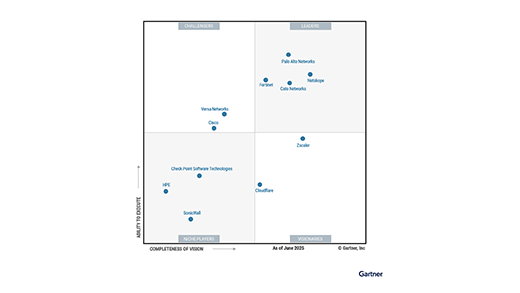
The Security Access Service Edge (SASE) model introduced by Gartner earlier this year is a valid reference model that can be used to aid in network transformation decisions; https://www.gartner.com/doc/reprints?id=1-6QW0Z4A&ct=190528&st=sb.
Timing
As annual budgets are reviewed over the coming months and towards the end of the financial year perhaps now it’s timely to think about the 3-5 year budgeting plan and the network and security convergence opportunity. I predict that from 2020 – 2025, most organisations will not only choose a cloud-first strategy for applications and infrastructure, but many will also be guided by both economic and technical reasons to decide that the future of network security is in the cloud. The traditional hub and spoke model we have relied upon is now legacy. It’s now time to sit down with both network and security teams to reimagine both the network and the perimeter.


 Leggi il blog